Explore how group therapy for social skills supports children in thriving in social situations through peer interactions and self-confidence.
Introduction
Imagine a boy struggling at school to talk to his friends to ask if they can join him in the play, but he cannot speak until the game ends. The boy misses the game not because he does not want to, but because he lacks the confidence to communicate. Strong social skills can help children build confidence and engage more comfortably in everyday interactions. Group therapy is an effective approach that builds these social skills through several strategies.
What is Group Therapy for Social Skills?
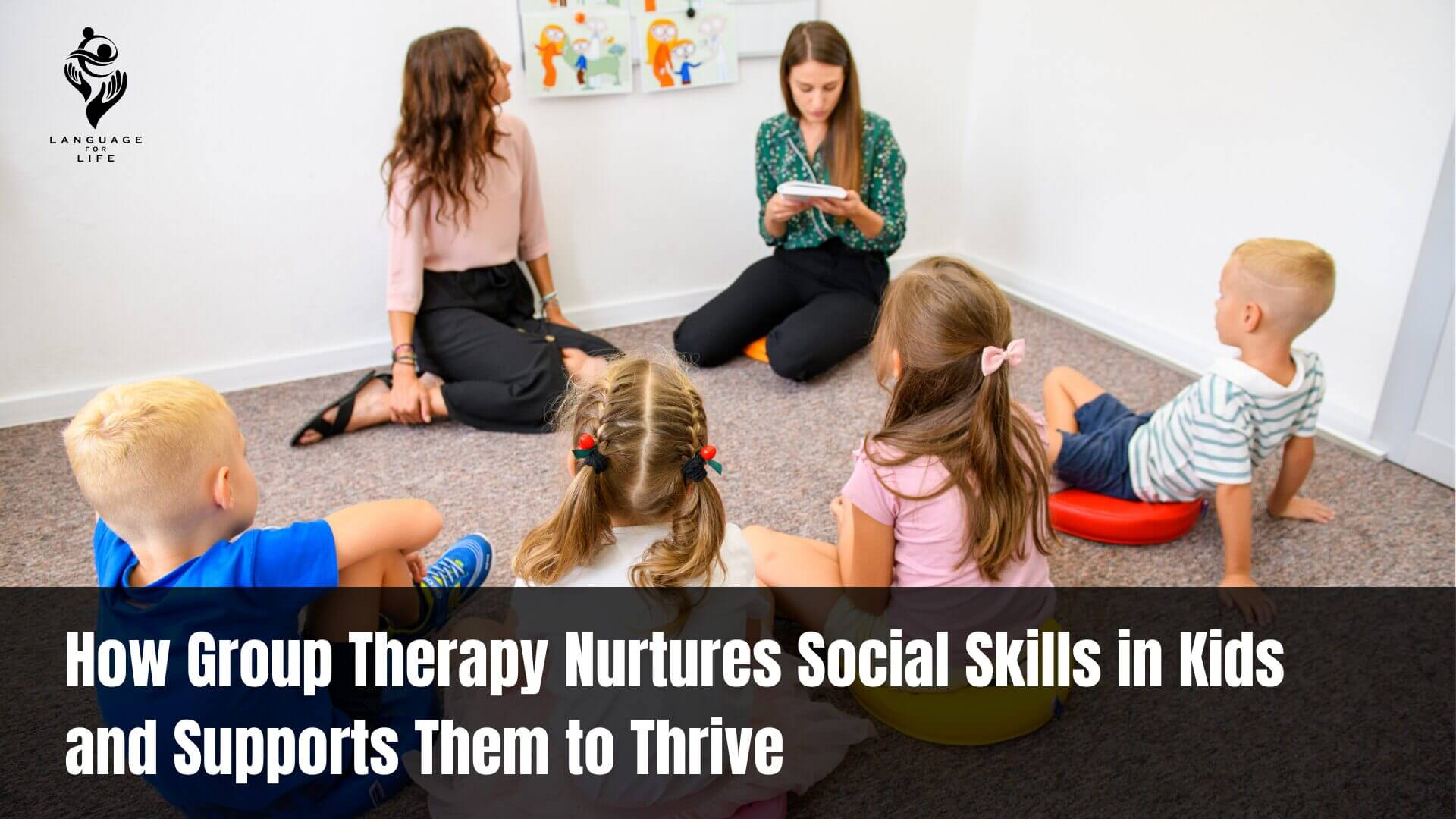
Group Therapy for Social Skills is a therapeutic intervention that typically helps children and adolescents foster their social skills — such as turn-taking, empathy, emotional awareness, sharing, and listening. This therapy mostly benefits children and adolescents with Autism, anxiety, speech challenges, and ADHD. A key feature that makes group therapy more effective or different from other approaches is peer intervention, where children learn and grow together by observing, communicating, and collaborating with others in a supportive, therapist-guided environment.
The Role of Group Therapy In Developing Social Skills
Unlike unstructured play, group therapy is structured and aims at specific skills, including joint attention, problem-solving, body language, emotional expression, and coping strategies. This therapeutic approach utilises several methods to develop social skills in children. The strategies include:
- Peer Modelling and Imitation – Children observe and imitate positive behaviours, such as turn-taking, cooperation, and communication, through peer interaction.
- Increased Motivation Through Shared Experience – A sense of belonging encourages participation and enjoyment in group tasks.
- Real-Life Social Practice – Group activities offer natural opportunities to apply social rules like waiting, responding, and asking for help.
- Skill Generalisation – Skills learned in therapy can often be applied to classrooms, playgrounds, and community settings.
- Building Confidence and Self-Regulation – Interactive group experiences help children manage emotions, handle challenges, and build lasting self-assurance.
Accordingly, group therapy for social skills enhances confidence and improves communication in children, helping them live more independently in society.
Real-Life Benefits of Group Therapy for Social Skills
Group therapy helps children and adolescents build confidence, self-esteem, emotional regulation, and communication skills. These benefits often appear in daily life in several ways:
- Improved communication and self-expression
- Increased confidence in social interactions
- Strengthened peer relationships and friendships
- Reduced social anxiety and fear of interaction
- Enhanced empathy and emotional understanding
- Improved self-regulation, patience, and impulse control
Together, these benefits support children to navigate social situations with confidence, form meaningful connections, and thrive in both academic and everyday settings.
Key Takeaways
Social skills are essential to live independently in society. As the time it takes to develop such skills varies from person to person, seeking the guidance of therapists is ideal. Group therapy for social skills helps children develop essential abilities that support personal growth and future independence.
At Language for Life, the therapists create supportive, interactive group settings where children learn through play, peer interaction, and guided practice. Each session is designed to nurture social skills, helping every child grow socially, emotionally, and personally.
References
Social Skills Group Therapy (kidsfirstservice)
How group therapy supports social skills (milestone)Importance of social skills (daar)